Earlier work
Urban
Urban looks at the contradictions of contemporary life: speed and stagnation, consumption and emptiness, artificiality and authenticity, resistance and conformity.
The works are concerned with the strange systems people build around status, identity, ownership and performance — and the friction that appears when those systems begin to look ridiculous.
The series uses material, repetition, texture and interruption to hold those tensions without resolving them.
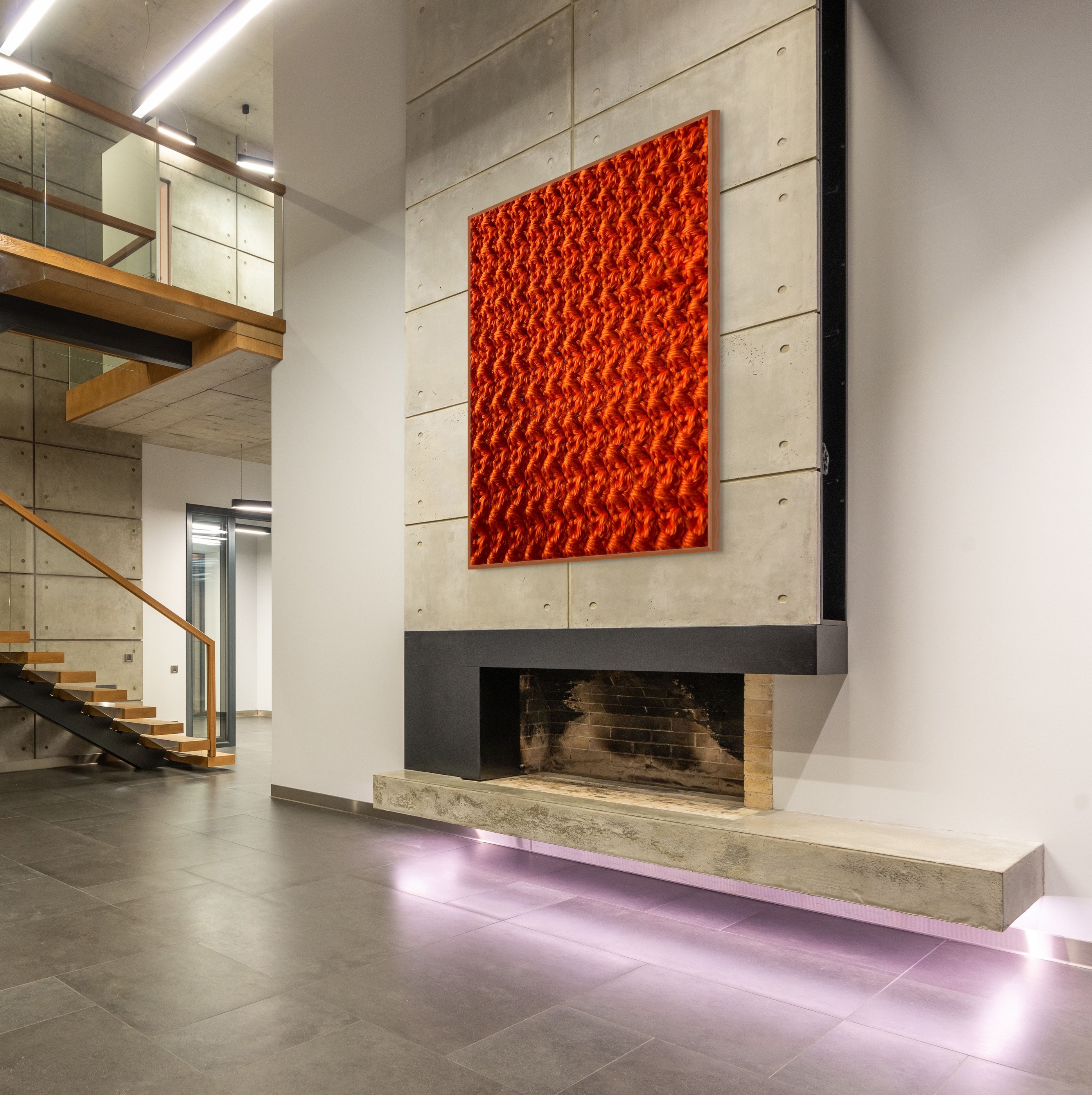
Fast Cars
01Urban · March 2026 · Acrylic · 180 × 40 cm
Artwork record
Fast Cars captures velocity without movement.
Rendered in a saturated orange, the piece pulses with the psychological tempo of acceleration — desire, urgency, the need to move forward without pause. It references not the object itself, but the condition surrounding it: speed as identity, as escape, as performance.
The elongated format mimics a stretched timeline, where moments blur and intention dissolves into momentum. The softness of acrylic yarn contrasts sharply with the concept of speed, creating a tension between material and meaning.
This is not about cars.
It is about the compulsion to keep going.
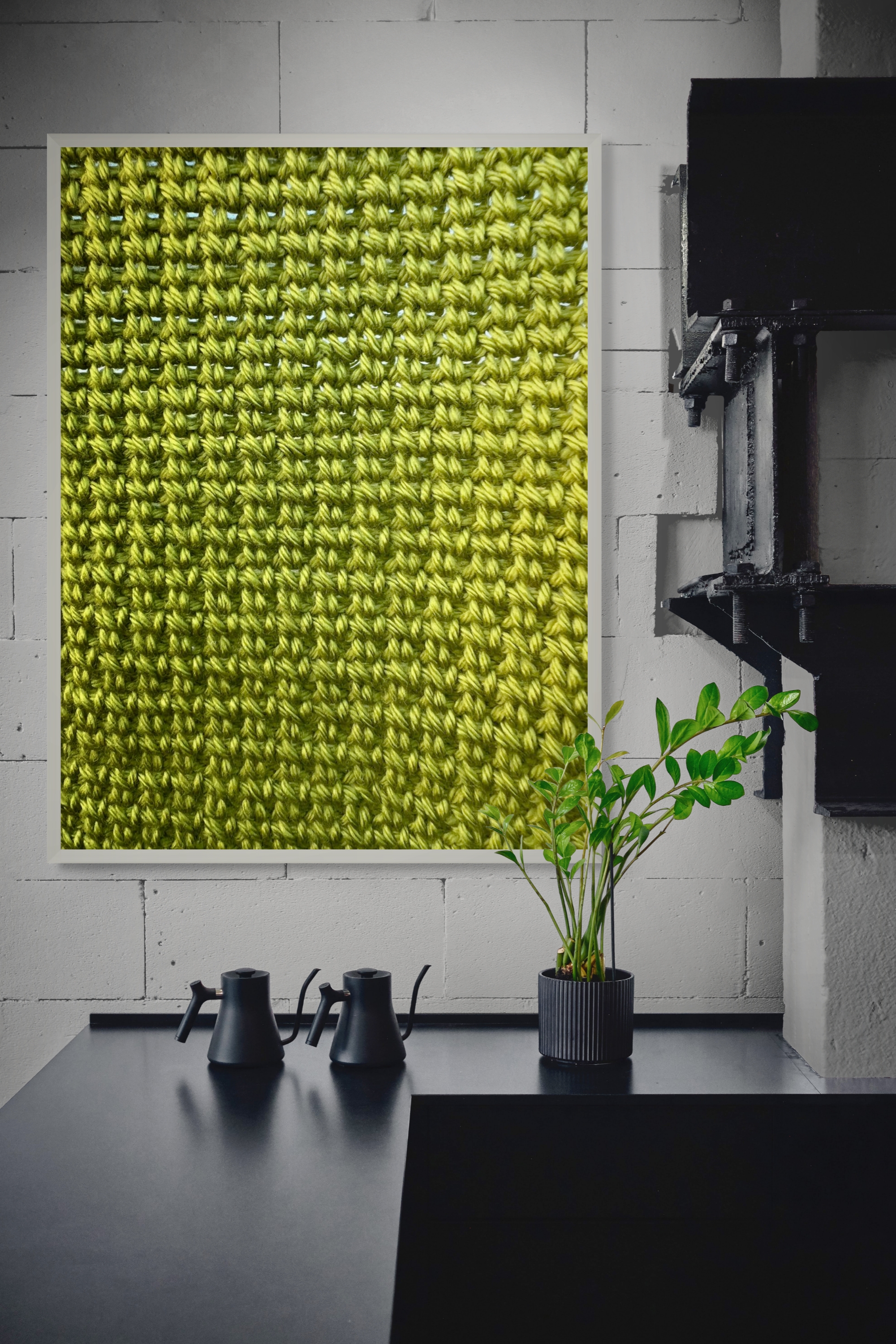
My Dog Does Not Pee On Fake Grass
02Urban · March 2026 · Acrylic · 180 × 40 cm
Artwork record
My Dog Does Not Pee on Fake Grass is a quiet act of refusal.
In a green that suggests nature while exposing imitation, the work confronts artificial environments and imposed behaviours. The statement is both literal and symbolic — a resistance to adaptation within conditions shaped by fabrication rather than instinct.
The piece speaks to authenticity, instinct, and the friction between natural impulses and constructed realities. Its humour is disarming, yet its critique remains precise and unflinching.
This is not about a dog.
It is about what refuses to conform.
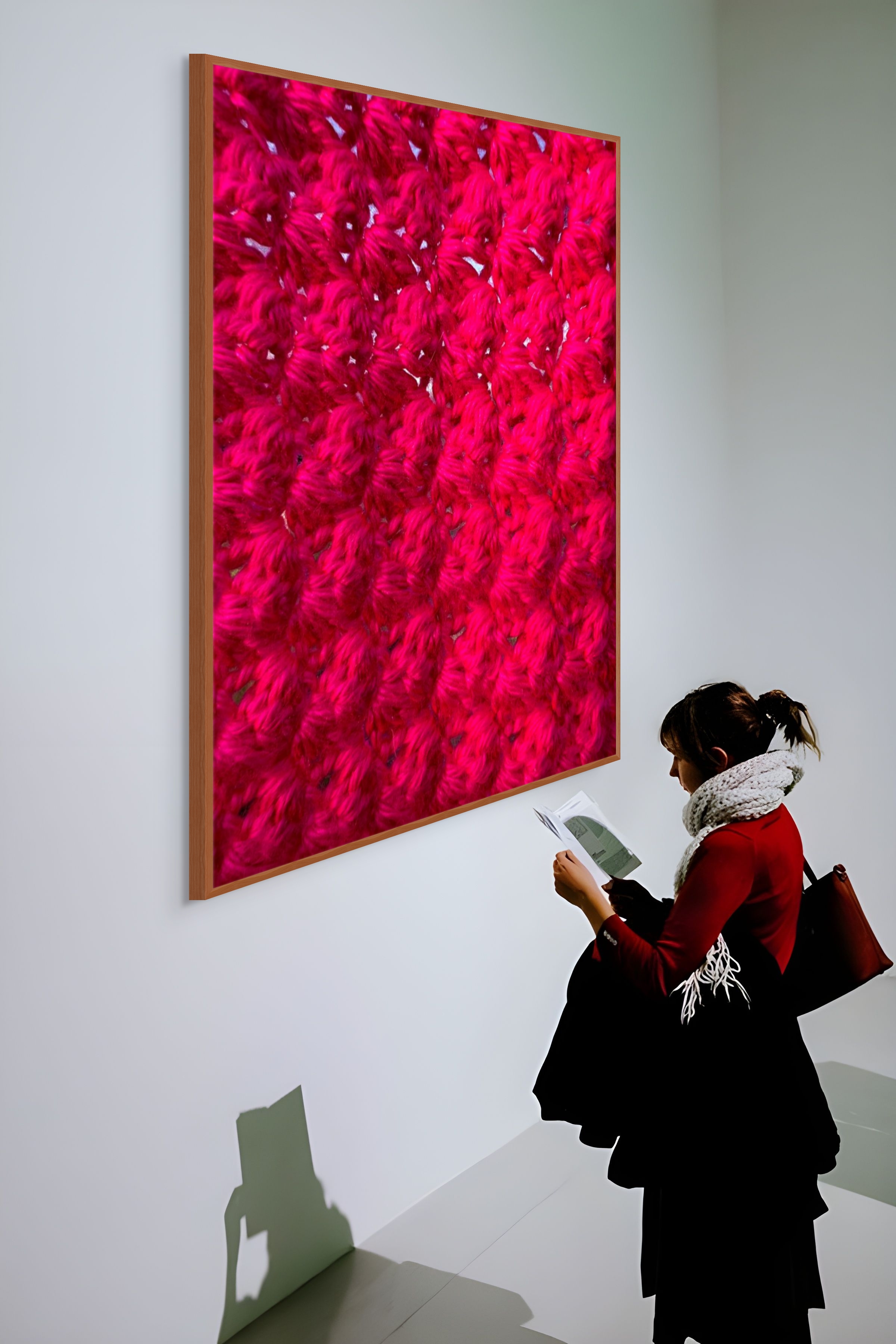
Kiss My Pouty Lips
03Urban · March 2026 · Acrylic · 180 × 40 cm
Artwork record
Kiss My Pouty Lips plays with the language of desire — exaggerated, commodified, and self-aware.
The pink palette evokes softness, femininity, and seduction, yet the scale and format disrupt any sense of delicacy. Instead, the piece becomes assertive, almost confrontational — an invitation that questions itself.
There is a duality at play: intimacy versus performance, vulnerability versus control. The title reads like both a demand and a dismissal, reflecting the ambiguity of modern expressions of attraction.
This is not about romance.
It is about who owns the narrative of desire.